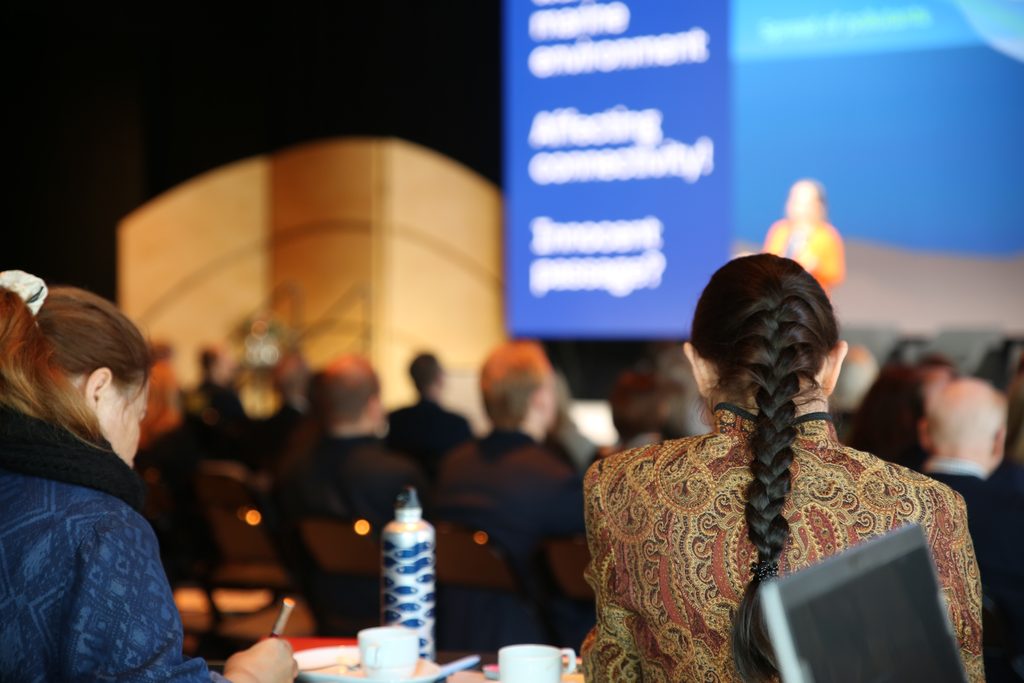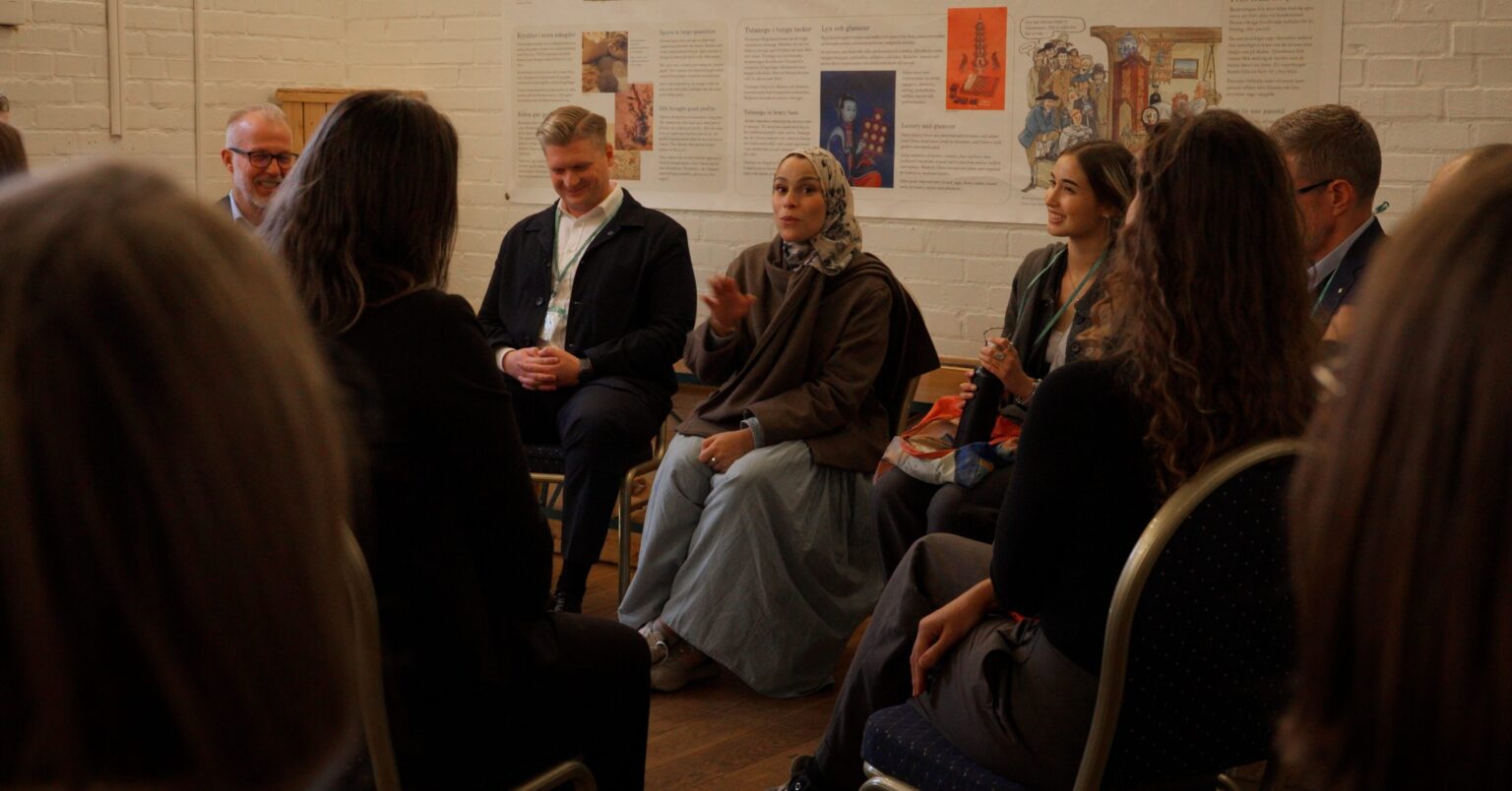
How can shipping continue to connect countries and economies while reducing its impact on one of the world’s most sensitive marine environments? This question was at the centre of the Baltic Sea seminar in Helsinki, bringing together perspectives from research, environmental organizations, ports and the logistics industry.
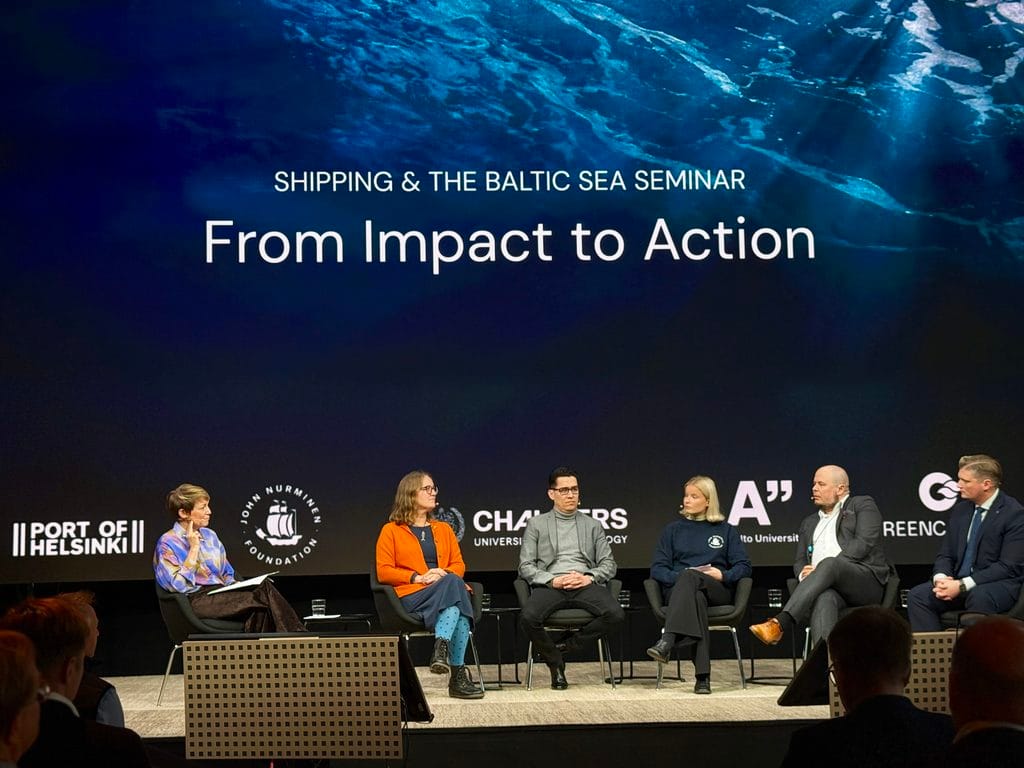
The seminar brought together experts to explore both the environmental impact of shipping and the concrete actions that can contribute to a healthier Baltic Sea. Speakers included Ida-Maja Hassellöv, Professor of Maritime Environmental Science at Chalmers University of Technology, Osiris Valdez Banda, Associate Professor in Marine and Arctic Technology at Aalto University, and Eeva Tähtikarhu from the John Nurminen Foundation. They were joined in the panel discussion by Andreas Slotte, Head of Sustainability at Port of Helsinki, and Patrik Westraeus, Head of Sustainability at Greencarrier, with Katri Makkonen moderating the seminar.
The seminar combined scientific insights with practical perspectives from across the maritime and logistics sector, focusing not only on the challenges facing the Baltic Sea but also on what can be done to drive change.
Shipping’s environmental impact goes beyond carbon emissions
One of the key themes of the seminar was the need to look beyond CO₂ when discussing the impact of shipping.

Professor Ida-Maja Hassellöv highlighted the many different pressures shipping can place on marine ecosystems, including underwater noise, antifouling paints, ballast water, wastewater, scrubber water, bilge water and atmospheric emissions. The presentation also addressed less visible impacts, such as turbulent wakes.
For the Baltic Sea, this broader perspective is particularly important. Research presented during the seminar highlighted, for example, the impact of copper from antifouling paints and pollutants from scrubber discharges.
The message was clear: reducing shipping’s environmental footprint requires a broader perspective, where climate emissions are addressed alongside other pressures on the marine environment.
There is no silver bullet
The transition to new maritime fuels was another central topic. Different solutions, from biofuels and e-methanol to hydrogen and ammonia, offer different opportunities as well as environmental, operational and safety considerations.
As Professor Osiris Valdez Banda put it during the seminar:
“There is no silver bullet.”
Rather than looking for one universal solution, the transition will require a combination of approaches, adapted to different routes, vessels and operating conditions.
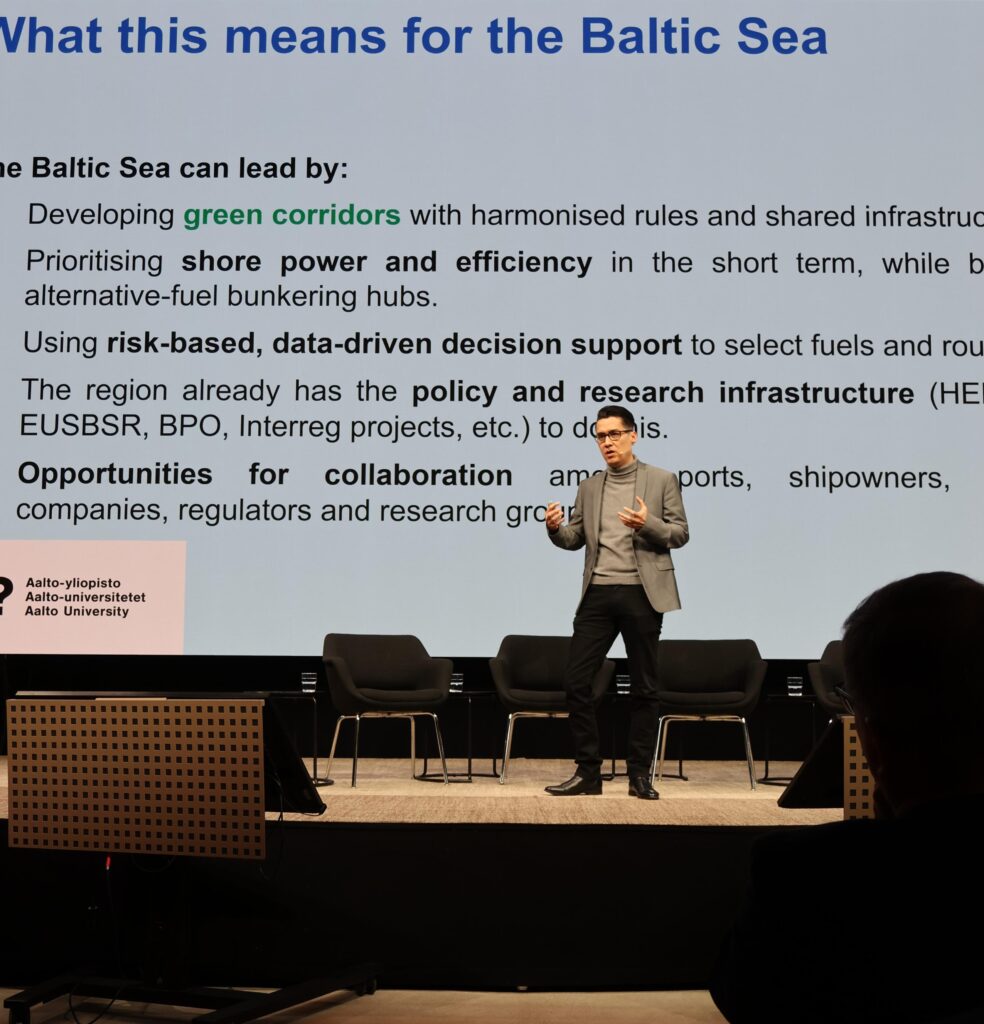
For the Baltic Sea region, the seminar highlighted opportunities such as green corridors, shore power and efficiency measures, infrastructure for alternative fuels, and stronger collaboration between ports, shipowners, energy companies, regulators and research organizations.
From environmental challenges to practical solutions
While the environmental challenges are significant, another important message from the seminar was that there are already areas where concrete action can be taken.
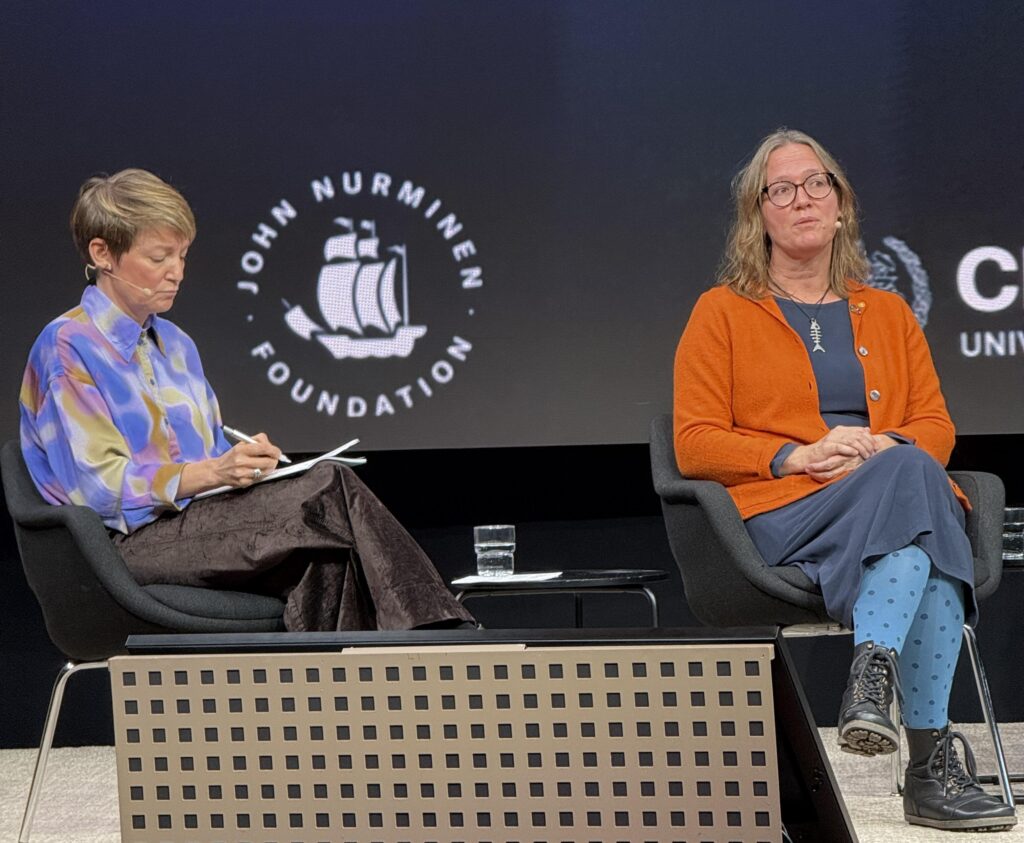
Eeva Tähtikarhu from the John Nurminen Foundation presented examples of initiatives aimed at reducing discharges from maritime operations. One was the Baltic Chemical Tanker Project 2025–2028, which focuses on identifying harmful chemicals released through tank washing, increasing awareness and developing solutions for handling washing waters and residues onshore.
Another example concerned cargo losses from dry bulk handling in ports. The work focuses on identifying discharge risks, sharing best practices and technologies, and implementing measures in Baltic Sea ports.
The Foundation’s Zero to the Sea project takes a broader supply-chain perspective, aiming to develop zero-discharge logistics chains through collaboration between shipping companies, ports, cargo owners, waste management companies and other actors.
Who pays for the transition?
Technology and knowledge alone, however, will not be enough. During the panel discussion, another important question was raised: who pays for the transition?
Andreas Slotte pointed to the economics of transportation and argued that the price of shipping today does not fully reflect its environmental impact.
The discussion also highlighted that the responsibility cannot rest with shipping companies alone. Patrik Westraeus emphasised that the cost of the transition needs to be shared across the entire supply chain.
This brings cargo owners, logistics providers, shipping companies and customers into the same conversation. Making the transition possible will require not only new technologies and fuels, but also a willingness to share responsibility for change.
Start with what we can do today
A recurring question throughout the seminar was how to move from understanding the challenges to actually doing something about them.
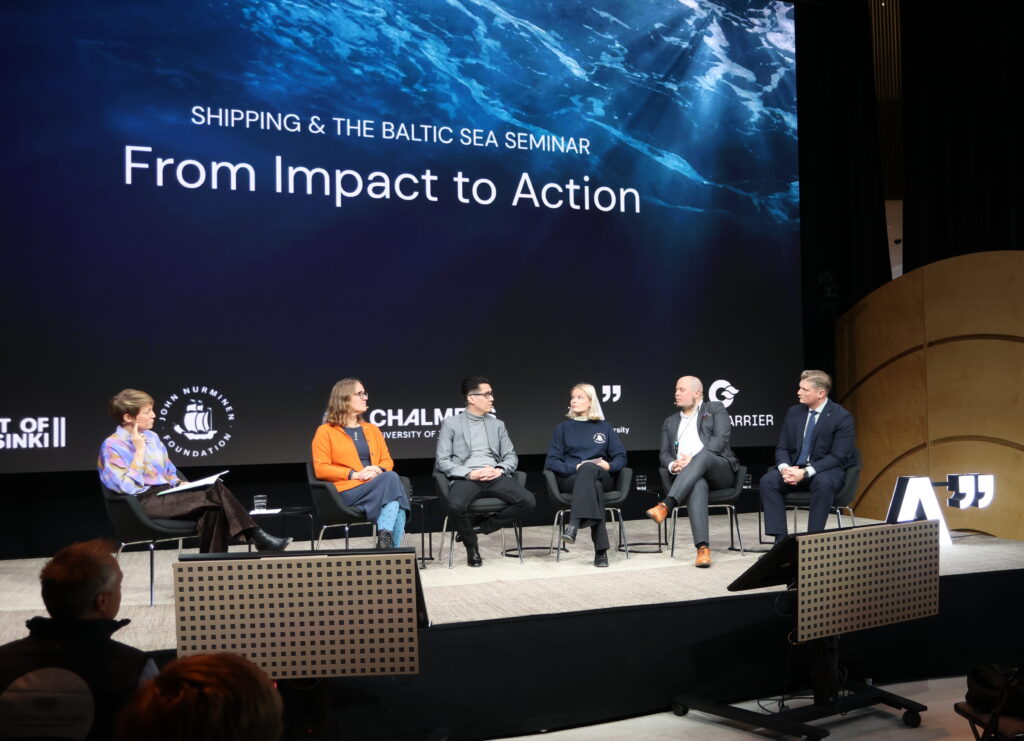
During the panel discussion, Patrik Westraeus stressed that action does not have to wait until we have all the answers. We can start with what we already know and what we can influence today, such as reducing CO₂ emissions, while continuing to learn more about shipping’s wider environmental impact.
No single actor can solve the challenge alone. Researchers, ports, shipping companies, cargo owners, logistics providers and environmental organizations all have a role to play in turning knowledge into action.
Perhaps that is the most important takeaway from From Impact to Action: there is no single solution, but that should not stop us from acting. We can start with what we know, take action where we can and continue to learn along the way.